Welcome to our 6th grade blog. It is exciting to take part in many global adventures and challenges and we hope you will connect and share with us during this journey. We will be learning about places, religions and people around the world (the past and the present) and would love to know what you are studying. We love to communicate with students from all different places and look forward to hearing from you. 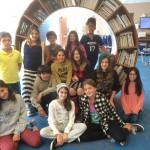
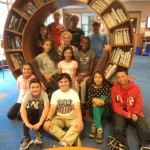
You will find links to our individual blog posts on our side bar and on the menu bar at the top of the page.

____________________________________________________________________________
We are Quadblogging this month with three other schools ….
1. Sharp Creek Elementary, Wabash, Indiana – 5th grade – Reading Group 2
2. Prince Of Peace Christian School, Carollton, Texas – 4th grade – Mrs Peterson’s Class
3. Williamsburg, Elementary, Geneva, Illinois – 5th grade – Mrs Frison’s Class
It is our turn this week to post on our blog and the three other schools will comment on our posts. 6th grade voted to choose the topic for this week’s assignment and “Passions” won. Here is the link to all our passion posts, but you will also find them under our names on the right side bar or under the Quadblogging category
_______________________________________________________
Check out our new stories – Personal Narratives – A snapshot of a memory in our lives…
We began by bringing in an object from home that triggered a specific memory we had from our past. We worked with a partner to talk through our memories and decide what part we would write about. We worked on two graphic organizers to clarify our thoughts and ideas and outline our stories. Then we began our first draft.
Criteria for personal narratives:
1. Engages the reader
2. Organizes events to unfold naturally
3. Develops characters and details
4. Great transitions and sentence variety
5. Closes with a reflection
__________________________________________________________________________________________________
Update on the Edublog 2015 Nominations…
We placed 4th in the group blog category #eddie15. Thank you to all of our voters for voting for us and thanks to all the students before us who built up this blog.

We have been nominated for two Edublog Awards! There are eleven different categories and we are nominated in two groups, ‘Best Group Blog’ and ‘Best Class Blog’.
Thank you to everybody who nominated us! Please vote if you like our blog! You can vote once per day from the same IP address until December 16th Vote for us here!
Our Blogging Challenge Posts – Check them out! This is the last week of the Blogging Challenge and we are reflecting on what we have accomplished. We wrote posts about us, families, Halloween, different foods and nature. We have written many comments and also received many. Thank you to everyone we have connected with. Blogging challenges are fun and we nominated blogs for the Edublogs Awards this week.
__________________________________________________________________
Do you celebrate any special holidays during the winter months? Let us know what your family celebrates.
Here is a link to what we celebrate



Menorah by John Pic from Flikr
Advent Wreath by Tiexana from Flikr
Crescent Moon and Star from SPTim
________________________________________________________________________________________________________________ The Not Perfect Hat Club By Jena Ball – Written By Isaac And Justin 12/8/15
The Not Perfect Hat Club By Jenna Ball is a book about a dog named Sir Isaac Newton that thinks all dogs have to be perfect, even though they don’t! Newton is not perfect and his owner brings him to a shelter because he wasn’t perfect enough for the dog show. He brought him to the shelter and Newton called it “catastrophe”. He started to recognize the sad voices of the pound. A man named Carl adopted Newton and another dog named Midge. He has many imperfections that he’s not happy with, but he learns (spoiler alert) that it’s okay not to be perfect. This book teaches children that no one can be perfect.
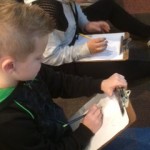
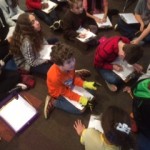
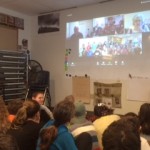
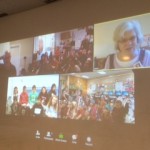
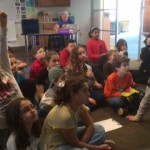
6th graders are working with our 2nd grade buddies on reading this book together and other activities. We video chatted with the author Jena Ball who is very funny and read us chapters. We also video chatted with two other schools, the author and Marty Keltz. We video chatted with more people than we had ever done with before – North Carolina, Canada, Upstate New York, Greece and us. Jenna taught us how to draw a dog, and she told us that it’s okay for the dog not to be perfect. It is important for kids to know that they aren’t perfect because if they try to be perfect, they will never succeed. The 6th graders and 2nd graders have a ton of fun together!
Comments
_______________________________________________________________________________________________
Scary Stories – Written By 6-1 Click on this link

We are excited to show our work through our scary stories. Slightly prior to Halloween, we wrote scary stories and submitted them to the Poughkeepsie Journal in a competition against different schools all over! Here’s how we wrote them:
-
We wrote our drafts. We wrote one paragraph at a time.
-
We had to make them less than 300 words. That was a new aspect of writing for us, as it meant that we had to make each word count.
-
We checked our stories over with some partners for clarity, spelling, etc
-
We made sure we had a few peer edits.
-
We submitted our stories to the Poughkeepsie Journal!
Every year we write scary stories. It is difficult to win because we have to compete with 6th, 7th, and 8th grades!
Our stories will send a chill down your spine. We hope you will enjoy them!
News Update…
We have some recognized writers in 6th grade! Zach in 6th grade was chosen as the runner up and Zoe and Elizabeth were given honorable mentions. Congratulations! Click on their names to read their amazing stories
Comments
____________________________________________________________________________________________________
Buddy Time
The First Few Weeks Of School
________________________________________________________
Middle School – Written by 6-2
Our PDS Middle School Environment is very different than other schools. We have a wonderful learning space called the learning commons. In the commons we have comfortable work spaces. We also have many fantastic classes including one that some people probably haven’t heard of. It’s called Humanities and it is a 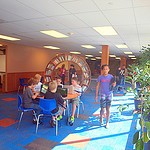 mix of English, Social Studies and History.
Middle schoolers also get the chance to use online academics and we call our teachers by their first names. We can organize our own dances and put on plays and perform for our families. We have a great arts program, and this year we just got a new music program in the middle school. PDS is always trying to create a better environment for their students, faculty and parents.
The lunches at our school are different than others. They have the option of a side salad or fruit bowl which most schools don’t have. We also have different things that most schools don’t have including dumplings for Chinese festivals and a salad bar for people who like to customize their salad. Over time every chef we’ve had has been different. One year snacks used to be brought to your classroom. They could be sweets or even healthy food like vegetables and fruit, but now we don’t have that. We have Pizza day and an occasional Taco Tuesday. I hope in the future we get more healthy foods!
The PDS athletic program offers many choices to encourage our students to be involved in multiple sports. All middle school students are eligible to join the basketball and soccer teams, they are also able to join the high school cross country teams. Girls in 7th and 8th can join the varsity softball team, and 8th grade boys and girls can sign up for the varsity Ultimate Frisbee team. Our sports program is off to a great start as our soccer players build momentum toward their first game of the year!
Even though most of the middle school has not gone on any field trips yet, we all know what to expect. The 8th graders are going to have a wonderful time in NYC. They will be seeing the Broadway show The Curious Incident of the Dog in the Nighttime. Another field trip that happens every year in the middle school is Nature’s Classroom. Please note that this is being written by a group of 6th graders who have not yet gone of this field trip. So we will explain the best we can! Nature’s classroom is a time when the whole Middle school goes to stay for a week in Massachusetts, learning and having lots of fun! We will have more on field trips for you once we go on one!
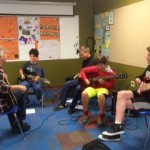
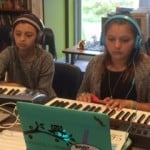 At PDS our Music program encourages everyone to play a wide range of instruments. We have teachers for wind instruments to strings percussion brass and vocals!. This year we were given the option of being in a chorus or in an ensemble. Both are great but if you don’t play an instrument there’s always the great choice of learning a new instrument. In chorus you work with our vocals and piano instructor, Brielle Grover on an expanse of different songs, all to improve your vocal range or just to have fun. In ensemble you will get to work with our bass instructor Damon Banks but he is a great instructor at everything. There are different sections for every instrument. Piano, Guitar(acoustic or electric), Percussion and vocals. We can’t wait to do our first performance for Chorus and Ensemble!
The middle school at PDS uses computers and technology for most of their work. The school provides each student with an e-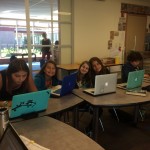 mail account, that way students and teachers can communicate in an easy way. On the first day of school every middle schooler has to sign a tech agreement, to agree to use technology in a responsible manner. Every day students are required to bring their laptop into school with a protective sleeve. We use our laptops every day in almost every class. We use them for classwork, homework, and more.
6th Grade – Written by 6-2
The difference between Lower School and Middle School is really big, so here is a little about it. In Lower School we had classes in the same room, now we change rooms basically every class. In middle school we have break time so we either eat a snack, go outside or go on our computers. In lower School we had recess and snack time. Now in 6th grade we have to remember what classes we have at what time, and not be late. It is sooo different in 6th grade.
We also have tons of more responsibilities in 6th grade, like going to the bus by ourselves. W have to be careful when we do that so we don’t miss the bus. Going to classes is a lot harder because we don’t have teachers to tell us where to go and we have to look at our schedules and navigate the day by ourselves. We have to pick some of the classes we take, which is always a hard decision for those who don’t know what they want.
In Math, we are learning about ratios. Ratios are things that let you explain the difference between two numbers (example: There are 5 boys at a party and 4 girls, the ratio for that would be 5:4 or 5 to 4). Equivalent ratios are Ratios that mean the same thing but they have different numbers. How you get an equivalent ratio is you multiply both number by 2, 3, 4, 5, etc? (example: 5:4 x2 = 10:8 – so 10:8 is equivalent to 5:4).
In Science lately we have been doing some labs. Right now we are finishing our Lifesaver Lab. The Lifesaver Lab is a lab where we are putting different colored Lifesaver in water to see which color goes quicker. Our results vary a little bit but orange seems to be the slowest.
In Spanish we have been learning about the days of the week. Also we have been doing stories where the teachers narrates and asks questions and we answer the questions in Spanish using the clues on the board.
We did a few polls to see what the 6th grade likes the most. Our first poll was what do you like better, Middle School or Lower School? The answer was that the 6th grade likes Middle School better. Our Second poll was what is your favorite class, Science, Spanish, Humanities or Math? The answer was that the 6th grade likes Science the most.
Humanities is a mix of a different subjects, and this year we are learning about medieval times. We learn about times from a long time ago and how they did things. We did some summer reading about a medieval times book called Crispin the Cross of Lead by Avi. It was interesting to see how much the world has changed since then and now. In Humanities we do lots of activities that have our group work together. One time we had to write what we thought Humanities was going to be like this year. Shirley is our Humanities teacher and she puts us in groups for a lot of different things. For example, we have things like editing which we do in pairs. We also do lots of other things in groups. We are reading two books right now. One is The Story of the World and the other is The Boy Who Harnessed the Wind. Humanities is a very fun and exciting class!!!
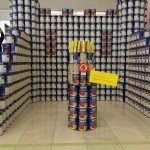
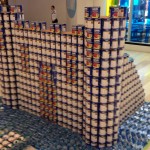
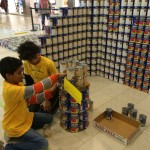
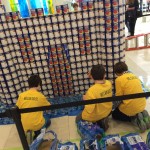
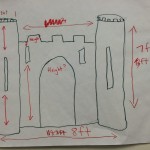
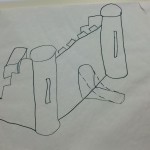
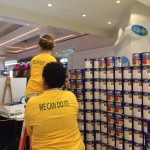



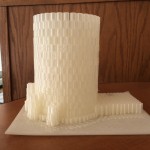
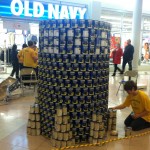
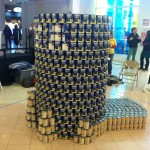
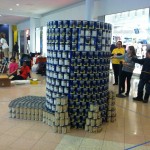
Hi my name is Nia I am in 6th grade and I go to Eagle Ridge Middle School in Ashburn,VA. I really love what you have done with the construction project. I think that it is a really cool way to just have fun, give back, and be creative. I hope that you will check out my english teachers blog and just highlight it then click the option that says go to this web page so you can see it!!
I really enjoyed speaking with you and your blog is by far one of the coolest ones I have seen.
https://kidblog.org/class/RombachRockstars/
My mistake. Now you can just click on the link!!
Have fun!!!
Dear Shirley and 6th Grade,
This is a very nice blog. I like the video that your posted. The activities you did look like fun.
-Kyler
Dear 6th graders
You guys are really smart.How long did it take you to build your projects.How many students do you have.If you would like to check out my blog here is a link to it.https://kidblog.org/class/baderbunch6-15/posts?author=7x2er5zuqe1584zrf0xpwx0mv&status=published&status=review&status=draft
Sincerly,California
Dear 6th graders
You guys are really smart.How long did it take you to build your projects.How many students do you have.If you would like to check out my blog here is a link to it.https://kidblog.org/class/baderbunch6-15/posts?author=7x2er5zuqe1584zrf0xpwx0mv&status=published&status=review&status=draft
Sincerly,Fairfield,California
Dear Sixth Graders,
I love your guy’s theme for october.You guy’s did great.How old are you? Would you like to check out my blog?https://kidblog.org/class/baderbunch6-15/posts?author=7x2er5zuqe1584zrf0xpwx0mv&status=published&status=review&status=draft
That can tower is awesome! I wish we could do that here. It looks like fun! Bye.
I wish I could do that tower that you guys made! I wish I could make one like the one that you guys made.